Hydrogen Connections DACH banner

Registration desk opens

Conference Opening: Mr Derek Michalski, Chief Executive Officer, The Voice of Renewables and TBA

Keynote Address: Ministry of Energy – awaiting final confirmation

Keynote Address: TBA

Panel overview:

We will examine how these regions align with the EU policies, like Hydrogen Strategy, RED III, Clean Industrial Deal, and Fit for 55, while also identifying gaps and challenges in permitting, certification, and regulation of supply and demand side. Particular attention will be paid to the interplay between national goals and regional cooperation, hydrogen valley projects, and the importance of clear, bankable legal structures to support private-sector participation.

Key Discussion Points:

  • Transposition and implementation of EU legislation status (REDIII, Gas decarbonisation and hydrogen package) and development of national legislation, including the timing of legal acts.
  • Policy goals – how hydrogen and e-fuels stand out in national energy policies and how those are aligned with wide EU policy.
  • How recent EU policy moves, like Clean Industrial Deal, Action Plan for Affordable Energy and upcoming European Grid Package, change the picture.
  • What policy instruments to be used to incentivise and de-risk development of hydrogen value chain – what are priorities, and plans.
  • How legal framework roll-out will aid hydrogen production and consumption.
  • Main challenges foreseen by policymakers and market players.

Audience Takeaways:

  • Understand where each region stands in terms of hydrogen strategy and legislation — and how this impacts market development and timelines.
  • Gain insights into how EU-level regulation is being transposed locally and how companies can prepare for upcoming compliance demands. Learn about the key contractual and regulatory hurdles in project structuring, certification, and offtake agreements.
  • Hear what investors and developers are looking for in terms of legal and regulatory bankability, risk mitigation, and permitting clarity.

Networking Break

Presentation: Mr Gian Schelling, Global Business Development Manager Renewables & Green Hydrogen, Hitachi Energy – Bringing H2 projects to successful FID: Challenges, opportunities and support for bankability.

Panel overview:

The panel will feature industrial and transport sector offtakers, policymakers, and market analysts discussing real demand signals, challenges in stimulating adoption, and how demand frameworks and incentives are evolving. We will also explore what buyers in sectors like fertilisers, steel, shipping and aviation need to see for the use of hydrogen to become viable – and bankable – at scale.

Key Discussion Points:

  • Compliance market – when it starts and how big it is in the region. How RFNBO quotas from EU regulations for transport, industry, marine and aviation are reflected nationally and is there a need for anything additional.
  • Compliance market • Is there a room for voluntary and market-based use of clean hydrogen. Which sectors does it concern.– when it starts and how big it is in the region. How RFNBO quotas from EU regulations for transport, industry, marine and aviation are reflected nationally and is there a need for anything additional.
  • What are the prospects of E-fuels sector development.
  • Hydrogen for mobility: what are the perspectives and challenges for development of H2 refuelling stations and what types of consumers would be using them. How competition with other fuels evolve.
  • Biogenic CO2 carbon capture potential and development. How it can be aligned with E-fuels market.
  • Incentives for hydrogen consumption for transportation and industry – what instruments are in place and what are needed, what is financial gap to close.

Audience Takeaways:

  • Understand which sectors are likely to drive hydrogen demand growth, and the unique market dynamics in the Baltics, Nordics, and CEE.
  • Learn what makes hydrogen bankable today – and what risks remain. Gain clarity on how the regions balance export ambitions with local decarbonisation needs – and where opportunities lie for infrastructure developers.
  • Learn about the most effective policy tools – like CfDs, industrial strategies, quotas and financing instruments – used to activate hydrogen demand.
  • Hear directly from industrial users on what they require in terms of pricing, reliability, regulation, and infrastructure to adopt hydrogen at scale.
  • Understand what demand-side clarity means for project bankability, HPA structuring, and investment attraction across the hydrogen value chain.
  • Ms Barbara Zuiderwijk, Managing Director, Green Giraffe

Networking Break

Panel sponsor:

Renwise Logo

Presentation: Mr Vytautas Ruolia, Chief Executive Officer, Renwise

Panel overview:

Bringing together developers, policymakers, and technology providers, the session will focus on how to scale up hydrogen production responsibly and competitively while navigating permitting, grid access, and water use. We will also assess how projects can be de-risked through strategic offtake agreements, co-location, and integrated planning.

Key Discussion Points:

  • Hydrogen and its derivatives production potential – overall perspectives in the region; update on projects in progress and planned.
  • Hydrogen export options – prerequisites and potential; local demand and usage prioritization. What is the business case and the prospects of export of hydrogen in pure form, or as E-fuels or other derivatives.
  • Critical factors to be implemented to allow hydrogen build-out in the region, like availability and the price of electricity, clarity of regulations and legal, offtake, infrastructure (transport and storage) and other investment conditions. Which of these are present or lacking.
  • Other pathways to produce renewable and low-carbon hydrogen (rather than electrolysis) – what they are, what is potential in the region, update on existing and planned projects, factors determining their success.

Audience Takeaways:

  • Gain insights into where green hydrogen production is taking off across the Baltics, Nordics, and CEE – and which players are leading the way.
  • Understand the key factors driving competitive production and where the infrastructure is needed to scale electrolysis with renewable energy inputs.
  • Learn about available funding schemes, how to structure bankable projects, and the role of EU and national financial instruments
  • Discover how to mitigate project risks through offtake agreements, partnerships, and regulatory alignment.

Networking Break

Panel sponsor:

Renwise Logo

Presentation: Mr Aistis Radavičius, Chief Development Officer, Renwise

Panel overview:

Key Discussion Points:

  • Hydrogen production emerging as the largest and relatively flexible new consumer of renewable energy – how it will influence development of generation assets.
  • How hydrogen sector is fit to serve electricity market flexibility needs – primarily ancillary services and balancing. What will the implications for the electricity system be?
  • Hydrogen offtakes – on- and off-grid, the need for structured PPAs. How high sensitivity of H2 production to electricity price shall be addressed.
  • Grid tariffication – the need for lower and dynamic grid tariffs to incentivise both connection to the energy grid and flexibility of H2 production. What solutions are expected there.

Audience Takeaways:

  • Learn how hydrogen can enhance grid stability, act as a flexible load, and support high-renewable energy systems.
  • Gain insights into how electricity market rules must adapt to support electrolysis, including time-of-use pricing, flexibility incentives, and balancing market access.
  • Understand how grid operators and project developers can work together to plan for grid infrastructure that minimises congestion and maximises efficiency.
  • Explore opportunities for hydrogen to link the electricity market with industry, transport, and heating – creating integrated energy ecosystems.
  • Discover how integrated electricity-hydrogen systems can improve project bankability, support long-term PPAs, and enable capacity market participation.

Networking Break

Presentation: Mr Louis Londe, Technical Director, Geostock

Panel overview:

Key Discussion Points:

  • NBHC and other major transport corridors – their importance, current status of development, further requirements to speed up their deployment, what is competition and co-operation of separate corridors. When we should expect open seasons and capacity booking procedures to be announced.
  • National hydrogen network development – how dialogue with the industry and mapping of it is ongoing, what are requirements, design, timeframe and pre-conditions.
  • Balancing hydrogen network without storage. Expected lengths of balancing periods and implications for H2 production, consumption and electricity markets.
  • Needs for storage and relevance of it from the market perspective. Location plans and time frame for the first underground storage facility in the region to be operational.
  • Other hydrogen storage potential in the region.

Audience Takeaways:

  • Understand where hydrogen pipelines and storage infrastructure are planned or under development across the Baltics, Nordics, and CEE.
  • Learn about the opportunities and technical challenges of repurposing existing gas infrastructure for hydrogen transmission.
  • Discover how large-scale hydrogen storage can support grid balancing, seasonal energy shifts, and energy security.
  • Gain insights into the emerging cross-border hydrogen corridors and how alignment between TSOs, market players and regulators is progressing.
  • Identify the key policy, regulatory, and financial tools needed to fast-track hydrogen infrastructure and attract infrastructure-scale investment.
  • Mr Louis Londe, Technical Director, Geostock

End of the conference.

Hydrogen Horizons – Baltics Nordics DACH 2025 – Agenda

PLEASE NOTE:

All timings are approximate. The organisers reserve the right o agenda the agenda to reflect market changes and updates and are not responsible for speakers no-show and last-minute replacements.

We are looking forward to meeting you at Hydrogen Horizons – Baltics Nordics CEE 2025.

Hydrogen Horizons - Baltics Nordics CEE 2025
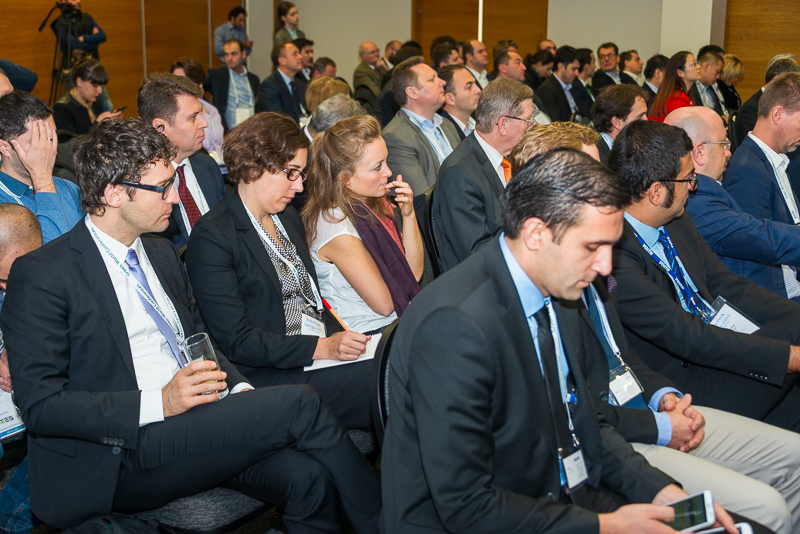
Networking at The Voice of Renewables event